When parents think about baby gate installation, the focus is usually on the product itself—what gate to buy, how it looks, and how quickly it can be installed. What gets overlooked is everything that actually determines whether the gate will work.
Because a baby gate isn’t just a product, it’s part of a home safety system. And when that system isn’t designed correctly, the result is usually frustration, poor usability, or gaps in safety.
Baby gate installation isn’t one-size-fits-all
One of the biggest misconceptions about baby gate installation is that there’s a standard approach. There isn’t. Every installation depends on three things: location, structure, and how the space is used.
A gate that works in a doorway won’t necessarily work at the top of a staircase. A solution that looks clean in one home may be completely impractical in another. The effectiveness of a gate is tied directly to where and how it’s installed—not just what it is.
Stairway gate installation is different
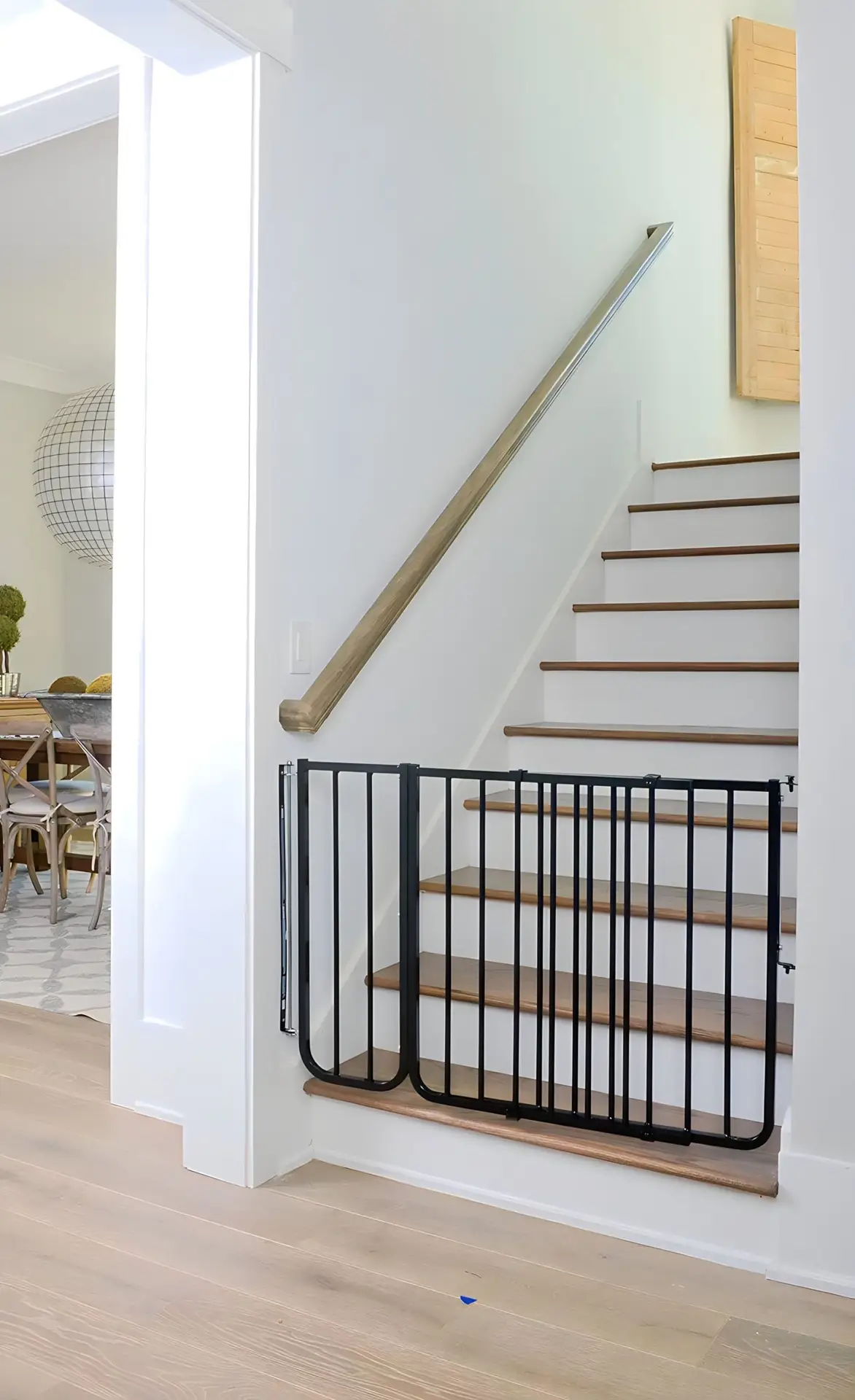
Staircases are one of the highest-risk areas in a home, and they require a completely different approach to baby gate installation.
Pressure-mounted gates are not used on stairs. They’re not designed for that level of risk, and using them in those areas creates a false sense of security. Instead, stairway installations require hardware-mounted gates that are secured directly into structural elements. This ensures the gate remains stable under pressure and repeated use, which is critical in preventing falls.
This is one of the most common mistakes in stair baby gate installation, choosing convenience or ease-of-installation over safety.
The structure of your home determines everything
Most homes aren’t built with baby gates in mind. Banisters, newel posts, uneven surfaces, and wide openings all affect how a gate can be installed. Safe Start customizes different mounting solutions—such as post mounts, clamps, and wall mounts–which are used to create secure attachment points where standard installation wouldn’t work.
This is where many DIY baby gate installation falls short. A hardware mounted gate is utilized, but the mounting method isn’t appropriate for the structure, which compromises both safety and durability.
Function matters
A gate can be technically “installed” and still fail in everyday use. If it’s difficult to open, blocks movement, or doesn’t align with how the space is used, it quickly becomes something parents work around—or worse, stop using consistently.
Effective baby gate installation accounts for how a family moves through the home. Gates should open easily, operate with one hand when needed, and integrate into daily routines without creating friction.
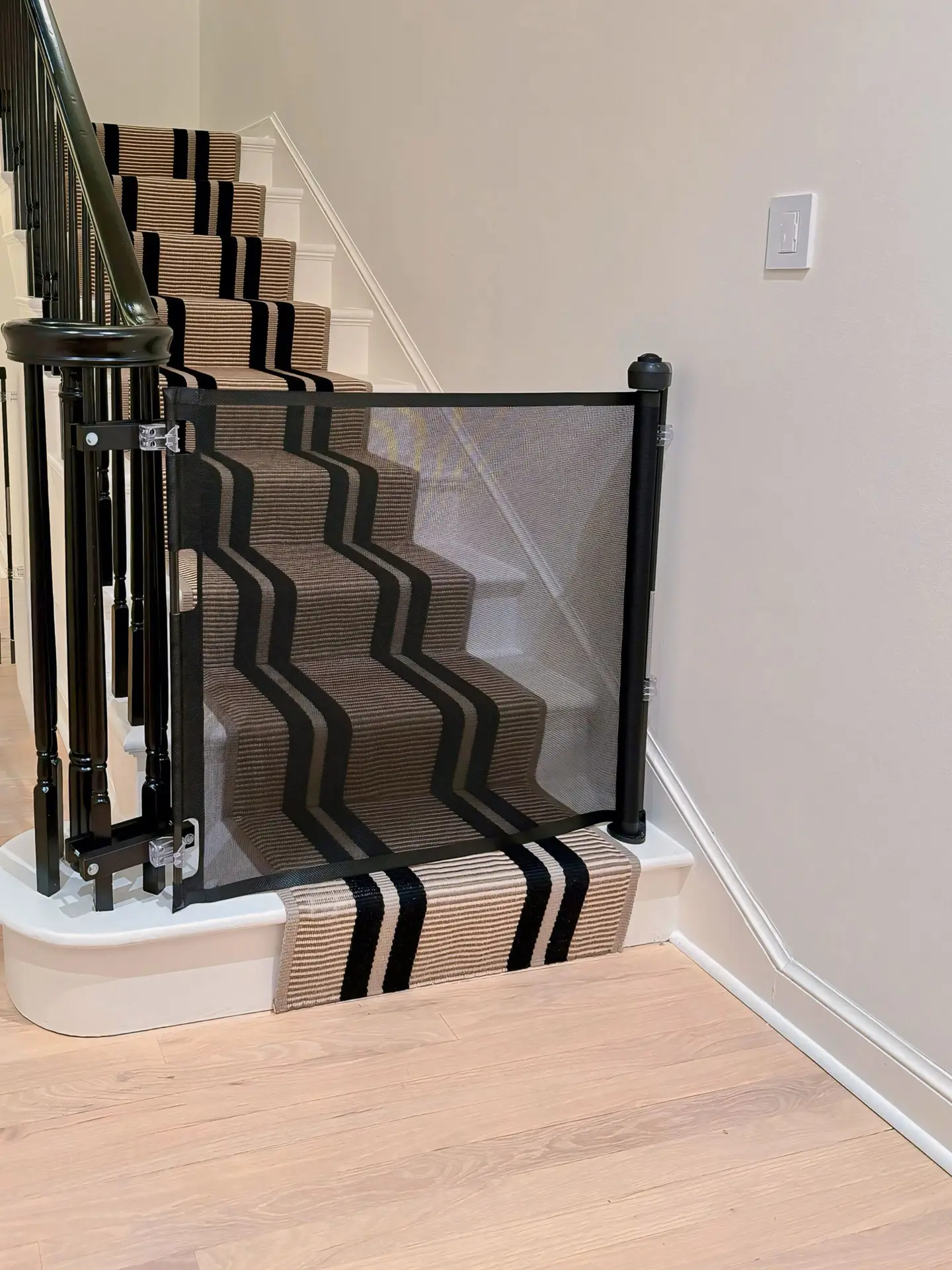
This is why retractable gates are often used in high-traffic areas—they maintain safety without permanently altering the space.
Not every space needs the same type of gate
One of the more nuanced parts of baby gate installation is choosing the right type of gate for the right location. Some spaces require fixed, durable gates designed for high-risk areas like stairways. Others benefit from retractable systems that adapt to wide openings or irregular layouts. We employ dozens of different configurations, extensions, modular panels, and custom layouts to ensure full coverage in spaces that don’t fit standard dimensions. The best solutions are ones matched to the conditions of the home.
What professional baby gate installation does differently
Professional baby gate installation isn’t about installing more gates, it’s about installing them correctly. That means evaluating:
Where protection is actually needed
How each space functions
What mounting method will hold up over time
The goal is to create a system where gates feel integrated, operate smoothly, and don’t require constant adjustment. When done correctly, they don’t draw attention—they just work.
A better standard for baby gate safety
When the proper gates are selected and installed based on real conditions—structure, use, and risk, they perform consistently and hold up over time. When they’re not, they become temporary solutions that need to be replaced, adjusted, or worked around. The difference is in the approach.
If you’re unsure how to approach baby gate installation in your home, schedule a Home Safety Consultation. Safe Start can help you determine the right solutions and ensure they’re implemented correctly.