
Rethinking Fireplace Safety
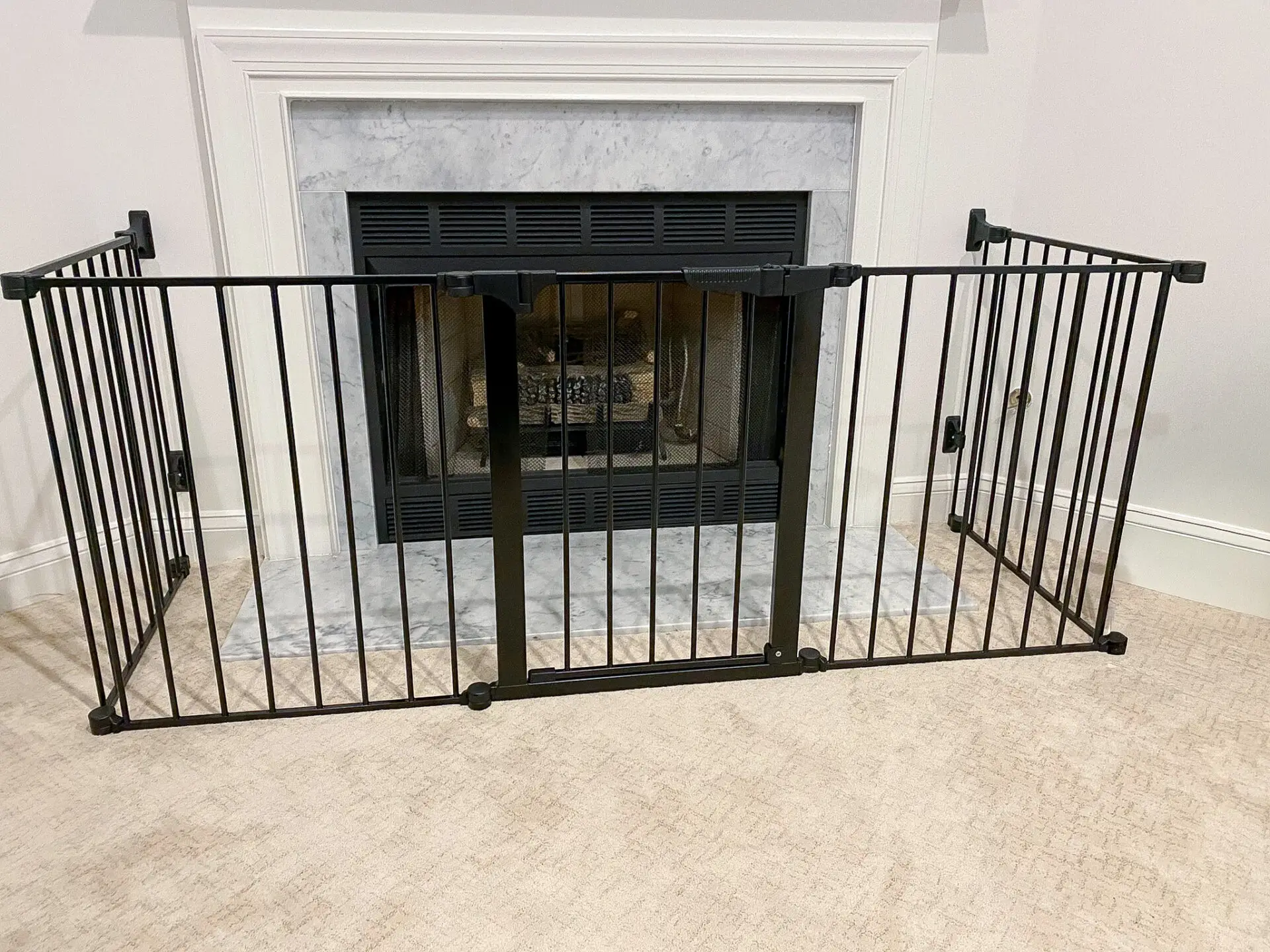
When babies begin to move, panic sets in, and many parents (and some child proofers) instinctively turn to hearth gates to fence off the fireplace. Hearth Gates are large, structured gates that encircle fireplaces. They are bulky, imposing, and certainly give the impression of safety. As a result, they have become a popular fireplace baby proofing solution often featured in photos and reels on social media.
They create a strong visual signal of safety, which is exactly why they’ve become one of the most recognizable fireplace baby proofing solutions—especially on social media. But visibility and effectiveness aren’t the same thing.
Why Hearth Gates Are Not the Right Solution
At first glance, a Hearth Gate seems like the obvious choice. It creates distance, adds a barrier, and appears to solve the problem in one step. In practice, it’s often an overcorrection.
A useful way to think about it: if you get a minor paper cut, you don’t put your entire hand in a cast. The solution should match the level of risk. In many homes, a full enclosure is more than what’s actually needed for effective child proofing around a fireplace. Beyond that, Hearth Gates introduce their own set of challenges. They tend to dominate the space visually, interrupt how the room functions, and are rarely as practical long-term as they initially seem.
The Limitations of Hearth Gates
Hearth Gates are often bulky and difficult to integrate into a living space. They take up a significant amount of room and can make an otherwise comfortable area feel restricted. From a design perspective, they stand out rather than blend in, which makes them a poor fit for homes where aesthetics matter.
They are also a relatively expensive option for what they provide. Most fall in the $200–$400 range, yet their usefulness can be limited. As children grow and become more mobile, simple barriers become less effective, which shortens the lifespan of the solution. Hearth Gates might seem like an easy solution, but a well-thought-out safety plan doesn’t usually include taking the easy way out.
More importantly, they often solve a problem that could be addressed in a more targeted and practical way. Effective fireplace baby proofing doesn’t require enclosing the entire area—it requires understanding how the fireplace is used and where the actual risks are.
Smarter Fireplace Baby Proofing Solutions
A more effective approach to baby proof a fireplace focuses on securing specific risks rather than blocking off the entire space.
- A Fireplace Safety Screen (custom-made by Safe Start), is a 50″, mesh fireplace screen that is discreetly tethered to the hearth. It is an excellent, effective solution. The tethers can be easily removed, allowing adult access, maintaining both safety and usability.
- For homes that don’t use the fireplace, a Plexiglass Cover is a clean, design-forward option. It removes access entirely while keeping the space visually integrated with the rest of the room.
- Fireplace doors can often be secured with Sliding lock mechanisms that prevent access without adding bulk.
- When standard locks aren’t a fit, a Fireplace Door Lock can achieve the same goal in a more adaptable way.
- For raised hearths, Hearth Padding can address impact risk directly without changing how the space functions day-to-day.
These fireplace safety solutions are more durable, more subtle, and better aligned with how families actually use their homes.
To see what these solutions look like installed, browse three of our albums: hearth padding and plexiglass on a stone hearth in Great Falls, an anchored fireplace screen in Bethesda, and ivory hearth padding on an arched stone fireplace in a Maryland home.
When a Hearth Gate Does Make Sense
There are situations where a Hearth Gate is appropriate. If you regularly use your fireplace, especially with an open flame, and need to create a larger safety boundary, a gate can be justified. In those cases, the goal is not just to prevent access, but to create a defined safety zone around an active hazard. The key is making that decision based on how your home functions, not based on what’s most commonly recommended.
A Practical Approach to Fireplace Safety
Before investing in a large, permanent barrier, it’s worth stepping back and evaluating what your space actually requires. Most homes benefit more from targeted, well-executed fireplace baby proofing solutions than from broad, highly visible interventions. Child proofing should improve how your home works, not complicate it. When the right solution is applied in the right way, safety becomes part of the environment rather than something layered on top of it.
If you’re unsure which fireplace safety solution makes sense for your home, a Home Safety Consultation can help you evaluate your space and choose the most effective approach.
With Expertise, Care, and Style
Alisa